
A cheap synth stops being cheap the second it slows you down in a session or lets you down on stage. That is why the search for the best keyboard synth under 1000 is less about raw specs and more about choosing the right compromise: keybed, synthesis type, hands-on control, polyphony, portability, and whether the instrument actually makes you want to play.
This price range is crowded for a reason. Around the $500 to $1,000 mark, you start seeing serious instruments rather than beginner toys, but you still have to watch for corners cut in keyboard quality, build, menu depth, or effects. Some models are excellent sound design tools but mediocre performance boards. Others are great live synths with limited depth once you get into programming. The right pick depends on what role the keyboard needs to play.
What makes the best keyboard synth under 1000?
For most players, the strongest options under $1,000 fall into one of three camps. First, there are compact performance synths with strong preset libraries and immediate controls. Second, there are true programming instruments built for shaping patches from scratch. Third, there are hybrid boards that cover multiple roles reasonably well without leading any single category.
The main filters are straightforward. If you play with two hands, mini keys can become a dealbreaker fast. If you care about analog tone and knob-per-function editing, your shortlist will look very different from someone who wants wavetable textures, onboard sequencing, and effects. And if you already work mostly in a DAW, a keyboard synth that doubles as a strong MIDI controller may punch above its price.
Best keyboard synth under 1000: the models worth your time
Korg Minilogue XD
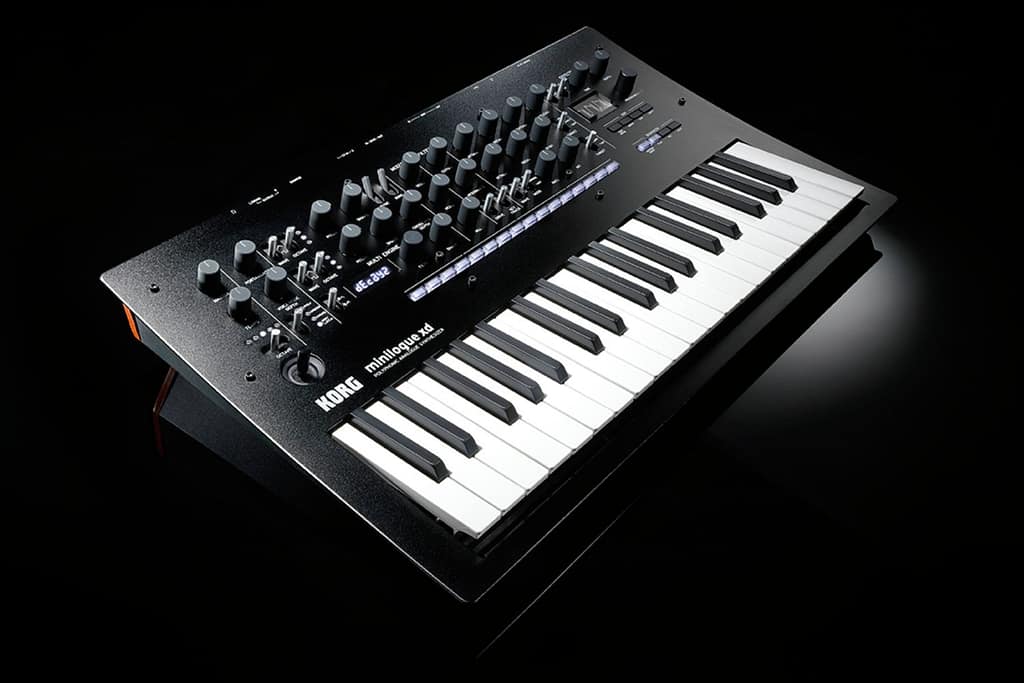
If you want the clearest all-around recommendation, the Minilogue XD still makes one of the strongest cases. It gives you true analog voice architecture, a digital multi-engine for extra oscillator types, built-in effects, and a layout that encourages programming instead of hiding it.
The trade-off is obvious: four voices. For basses, leads, plucks, sequences, and a lot of chord work, that is manageable. For dense pads or more piano-style playing, it can feel tight. The slim keys also divide opinion. Still, in terms of sound quality, immediacy, and range, it remains one of the most complete synths in this bracket.
This is a strong fit for producers who want analog character without giving up modern flexibility. It is less ideal for players who prioritize a full-size keybed or need broad multitimbral workstation behavior.
ASM Hydrasynth Explorer

The Hydrasynth Explorer is one of the smartest choices for sound designers shopping below $1,000. It is a digital synth, but not in a sterile or preset-only way. The modulation depth is excellent, the wave morphing possibilities are broad, and the instrument rewards curiosity.
Its polyphonic aftertouch support is a major draw, especially at this price. Few keyboard synths in the category feel this expressive. The pads, evolving textures, and animated motion are where it really separates itself. You can build aggressive modern sounds too, but its biggest strength is complex, moving timbre.
The trade-off is workflow. It is well designed, but this is still a deeper synth than a simple analog board. If you want immediate one-knob-per-function control for every parameter, you may prefer something more direct. If you want a compact synth that punches far above its size in synthesis depth, this one is hard to ignore.
Roland JD-Xi
The JD-Xi remains a useful wildcard because it does several things at once. You get analog and digital synthesis, a vocoder, drum sounds, and a sequencer in a very portable format. For electronic producers who sketch ideas quickly, it can be surprisingly productive.
Its biggest limitation is also the first thing most players notice: mini keys. If your priority is traditional keyboard feel, move on. Editing can also feel less immediate than the front panel suggests once you go beyond basic tweaks. But judged as a compact songwriting and pattern-building synth, it still offers a lot for the money.
This is best for producers who value versatility, sequencing, and portability over luxurious key action. It is less convincing as a main performance keyboard.
Yamaha MX61
Not every buyer looking for the best keyboard synth under 1000 wants deep synthesis. Some need a reliable, lightweight board with a wide sound set that can cover gigs, rehearsals, and home recording. The Yamaha MX61 fits that job well.
It leans more toward workstation territory than pure synth design, which is exactly why some players will prefer it. You get a broad palette of usable sounds, solid playability, and practical integration for songwriting setups. It is not the board you buy for front-panel experimentation or modular-style routing. It is the board you buy when you need to show up, load a patch, and get through a set without drama.
If your music needs pianos, EPs, pads, basses, leads, and bread-and-butter sounds in one lightweight instrument, the MX61 is a sensible pick. If your goal is learning synthesis in a hands-on way, other options are stronger.
Arturia MiniFreak
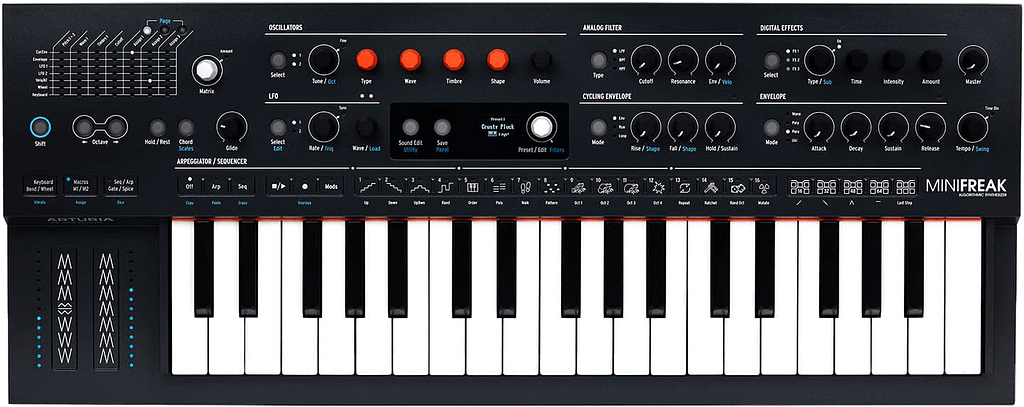
The MiniFreak is one of the most interesting modern synths in this segment because it does not pretend to be vintage-first. It is digital at the oscillator level, analog in the filters, and built around experimentation. The result is a synth that can sound clean, unstable, harsh, glassy, or surprisingly warm depending on how you approach it.
Its strength is range. It covers modern electronic textures, cinematic pads, broken digital motion, and plenty of bread-and-butter synth duties too. The interface is better than many deeper synths at this price, with enough direct control to keep you moving.
The mini keys will be a dealbreaker for some players, and the overall sound character is not as immediately familiar as a classic subtractive analog board. But if you want a keyboard synth that feels current rather than nostalgic, the MiniFreak deserves serious attention.
Novation Ultranova
The Ultranova is older now, but it still has a place in this conversation because it offers strong digital synthesis, useful effects, and performance-oriented control in a package that often represents good value. It can do sharp leads, polished pads, and articulate modern textures with ease.
Its interface is not as inviting as newer competitors, and some players will find the sound a little more hi-fi than character-rich. That depends on taste. In dense pop, electronic, and hybrid production, that polish can be an asset rather than a flaw.
For buyers who prioritize VA-style synthesis, patch variety, and controller functionality, it remains a practical option. For someone chasing analog feel or the newest workflow ideas, it may feel dated.
Korg KingKORG Neo
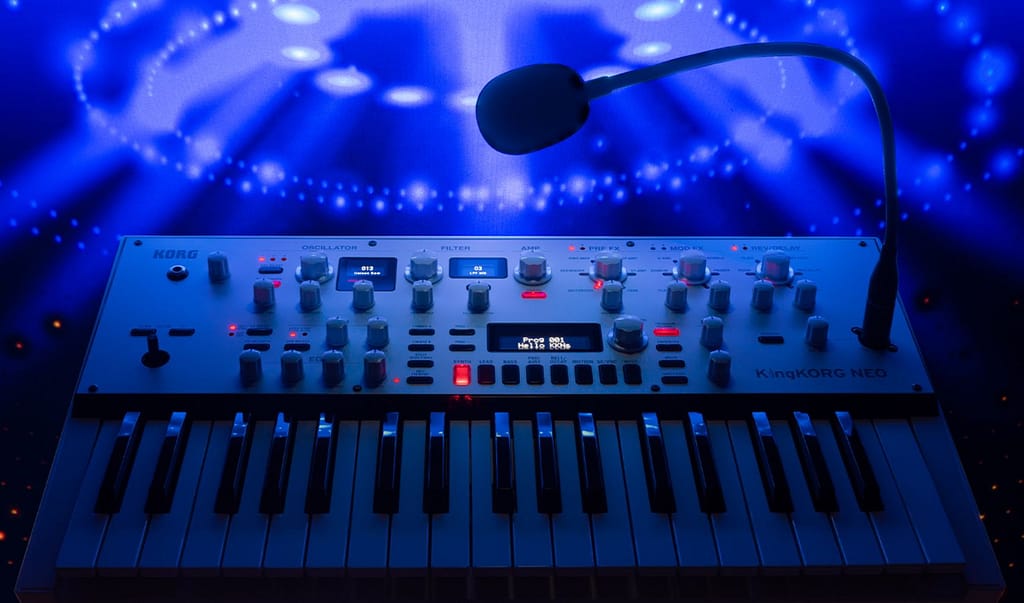
If you can find it under the $1,000 line, the KingKORG Neo is worth a look for players who want a performance-friendly virtual analog synth with a more traditional keyboard-first orientation. It is built around playable, stage-usable sounds and gives you enough real-time control to keep performances lively.
Where it scores well is immediacy. It is easier to approach than some deeper digital engines, and it can cover classic synth territory convincingly. Where it gives ground is in outright synthesis complexity compared with something like the Hydrasynth Explorer or MiniFreak.
This is a strong choice for gigging players who want familiar synth sounds quickly and do not need extreme programming depth.
How to choose the best keyboard synth under 1000 for your setup
Start with the keyboard itself. That sounds obvious, but buyers regularly get distracted by synthesis engines and overlook the playing experience. If you are a pianist or perform live, full-size keys may matter more than an extra modulation page or a more exotic oscillator mode. If the synth is mainly for studio sequencing, mini keys may be perfectly fine.
Then consider whether you want a player’s instrument or a programmer’s instrument. The Minilogue XD and KingKORG Neo lean toward immediate performance use. The Hydrasynth Explorer and MiniFreak reward deeper programming sessions. The MX61 is more about coverage and reliability than synthesis exploration.
Sound character matters too, but not in the simplistic analog-versus-digital way. Analog boards often win on immediacy and certain kinds of organic response. Digital boards often win on polyphony, modulation depth, and broader sonic range. Hybrid designs can give you some of both, though usually with a learning curve attached.
Finally, be honest about the role this synth will fill six months from now. A lot of instruments under $1,000 are exciting for two weeks and frustrating after that because they do not match your actual workflow. The right purchase is not always the deepest engine or the biggest feature list. It is the one that fits how you write, play, and finish music.
For most buyers, the Minilogue XD is still the safest recommendation if you want balance, strong sound, and a genuinely musical interface. If you care more about modern digital design, the Hydrasynth Explorer and MiniFreak are stronger bets. If you need an all-purpose gigging board, the MX61 makes more sense than many flashier synths. Buy the one that solves your real musical problem, not the one that looks busiest on a spec sheet.