
A Modern, Layered Wavetable Synth Built for Performance and Precision
The Waldorf Protein is a compact 8-voice wavetable synthesizer that brings together the company’s legacy of digital synthesis with a modern, performance-focused design. Built around custom ASIC Microwave oscillators, Protein delivers classic Waldorf wavetable character while expanding it through four-layer architecture, advanced sequencing, MPE support, and flexible effects.
Designed to be lightweight, portable, and deeply expressive, Protein targets producers and performers who want powerful digital sound design without the bulk or complexity of larger flagship instruments.
Our Rating: ★ 9.1 / 10
Protein earns a strong score for its powerful wavetable engine, layered design, sequencing depth, and expressive MPE support. Minor deductions reflect its compact interface and modest voice count, but overall it delivers exceptional flexibility and sound quality in a small, modern package.
Design and Build Quality
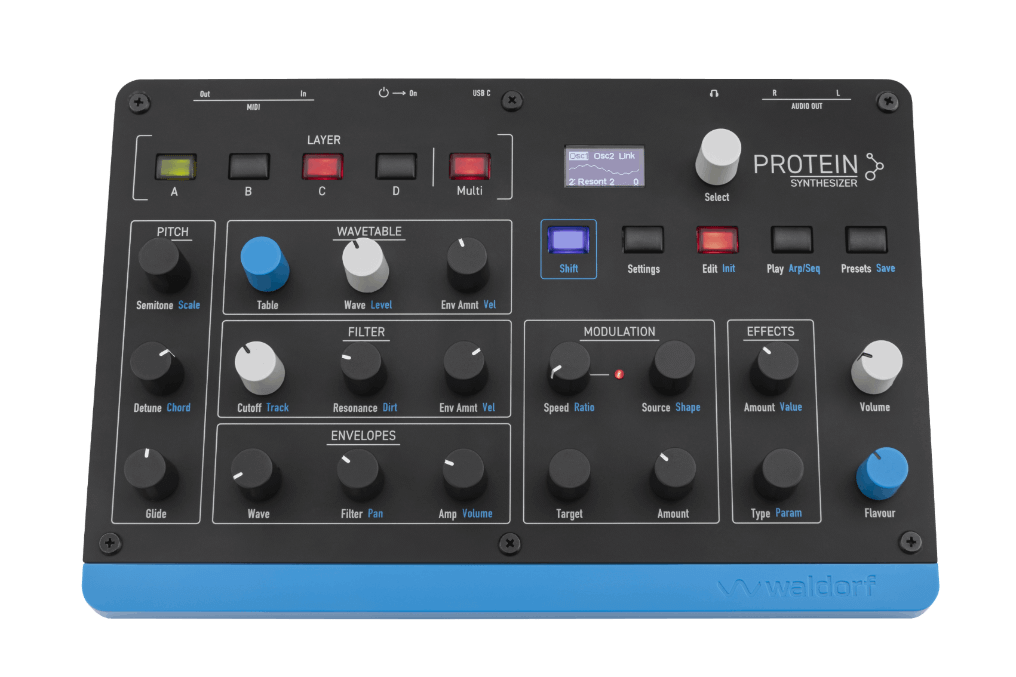
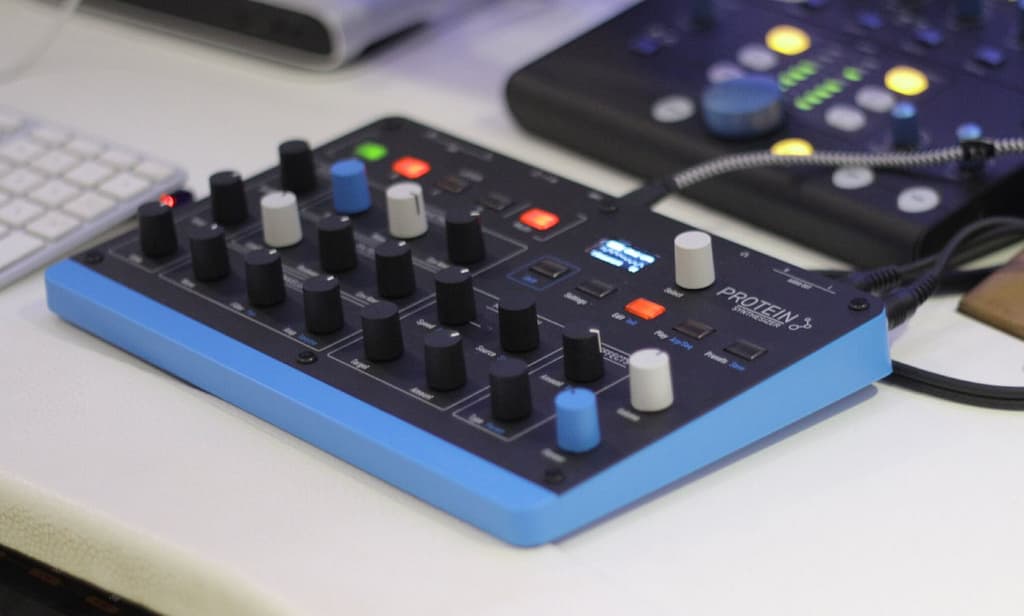
Protein features a compact, lightweight desktop format that is clearly intended for modern studios and live rigs where space and portability matter. The enclosure is minimal but robust, with a clean front panel that prioritizes clarity and fast access to core parameters.
Despite its small size, the layout is thoughtfully designed, balancing hands-on control with efficient use of shift functions. The result is an instrument that feels focused rather than cramped, encouraging exploration without overwhelming the user.
Sound Engine and Oscillators
At the heart of Protein are Waldorf’s ASIC Microwave wavetable oscillators, delivering the sharp, precise, and harmonically rich sound the brand is known for. These oscillators provide access to classic and modern wavetable textures, ranging from smooth evolving pads to aggressive digital leads.
The synth offers 8 voices of polyphony, but its true strength lies in its 4-layer architecture. Each layer can host its own sound, arpeggiator, and modulation, allowing complex stacked patches, splits, and evolving textures that far exceed what the raw polyphony numbers suggest.
This layered approach makes Protein particularly effective for cinematic sounds, motion-heavy pads, and rhythmically animated patches.
Layers, Sequencing, and Arpeggiation
Each of Protein’s four layers can operate independently, with its own arpeggiator and step sequencer. This enables highly complex internal motion, such as polyrhythmic patterns, layered sequences, or evolving harmonic shifts within a single patch.
The step sequencers are designed for both melodic and modulation duties, allowing patterns to shape pitch, rhythm, and movement over time. Combined with the arpeggiators, Protein excels at generating dynamic, tempo-synced textures that feel alive and performance-ready.
Modulation and MPE Expression
Protein supports MPE (MIDI Polyphonic Expression), making it a strong match for expressive controllers such as the Seaboard or LinnStrument. This allows per-note control over parameters like pitch, timbre, and modulation, greatly expanding expressive potential.
While compact, the modulation system is flexible enough to support evolving sound design and responsive performance, especially when combined with layered sequencing and MPE input.
Effects and Sound Processing
Protein includes two independent effect slots, allowing users to process sounds internally without relying on external gear. These effects complement the digital wavetable engine well, adding depth, movement, and polish to both individual layers and stacked sounds.
The effects are designed to integrate seamlessly into sound design rather than function as simple finishing tools, reinforcing Protein’s identity as a creative, performance-oriented instrument.
Connectivity and Integration
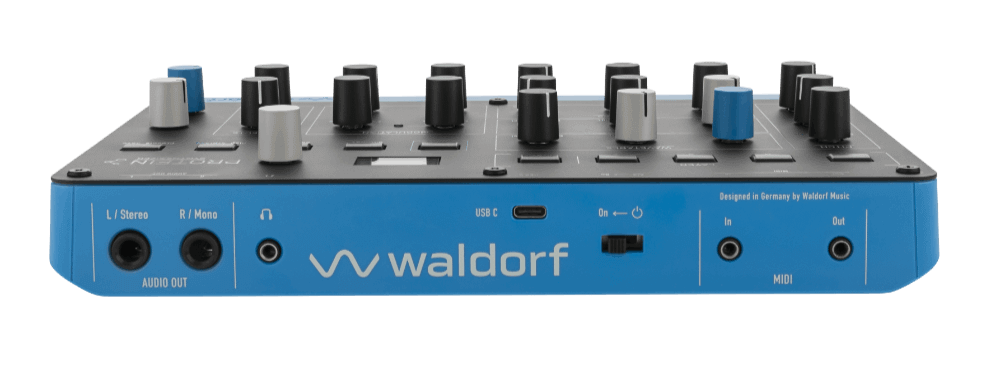
Connectivity is streamlined and modern, with USB-MIDI providing easy integration into DAW-based setups. This makes Protein well suited for hybrid workflows where hardware sound design and software sequencing coexist.
Its compact footprint and USB-powered convenience make it an appealing option for mobile setups and live performance rigs.
Advantages
- Authentic Waldorf wavetable sound using ASIC Microwave oscillators
- Four-layer architecture greatly expands sonic complexity
- Per-layer arpeggiators and step sequencers
- MPE support for expressive, per-note control
- Compact and lightweight design
- Two onboard effect slots for internal sound shaping
- Strong balance between depth and portability
Limitations
- 8-voice polyphony can feel limiting without careful layer management
- Compact interface may require some shift-function learning
- Digital-only architecture may not appeal to analog purists
- Best results require time spent understanding layering and sequencing
Verdict
The Waldorf Protein is a thoughtfully designed wavetable synthesizer that prioritizes layered complexity, expressive control, and portability. Rather than chasing raw polyphony or analog emulation, it focuses on making a smaller number of voices work harder through smart architecture and sequencing.
For producers who appreciate Waldorf’s digital heritage and want a modern, performance-ready wavetable synth that fits easily into contemporary setups, Protein stands out as a highly capable and creatively inspiring instrument.