
A Powerful 88-Key Performance Synth for Stage and Studio
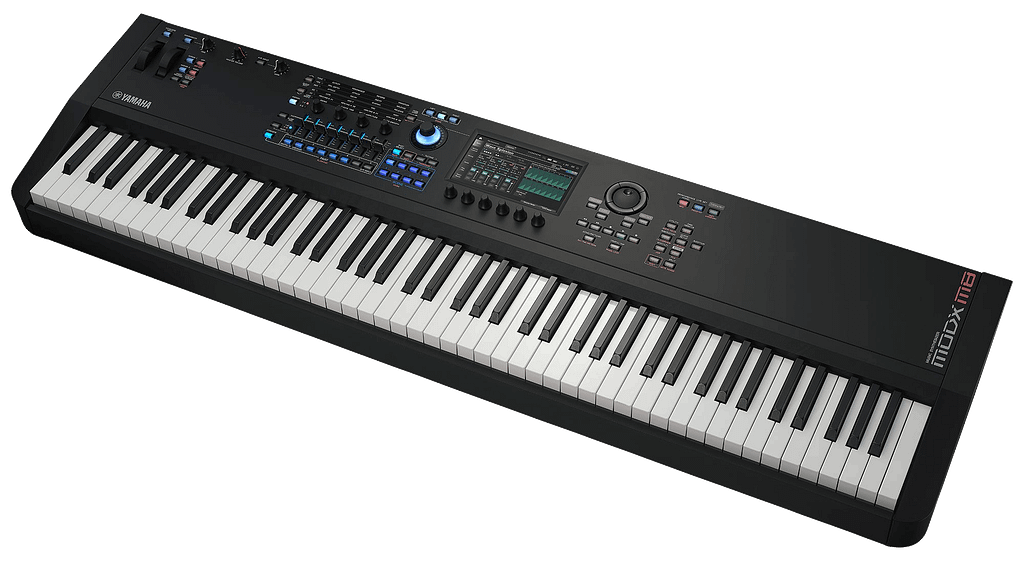
The Yamaha MODX M8 is an 88-key performance synthesizer designed primarily for pianists, producers, and working musicians who need expressive playability combined with deep synthesis power. Sharing its core technology with Yamaha’s flagship MONTAGE M series, the MODX M8 delivers a refined balance of realistic acoustic instruments, advanced synthesis engines, and modern workflow tools, all in a lightweight and comparatively affordable package.
With its graded hammer action keybed, three powerful sound engines, expanded polyphony, improved controls, and strong DAW integration, the MODX M8 positions itself as a serious stage and studio instrument for players who want realism and creative depth without stepping into flagship pricing.
Our Rating: ★ 9.1 / 10
The MODX M8 earns a high score for its sound engines, expressive control, realistic keybed, and outstanding value. Minor workflow limitations and the lack of built-in aftertouch prevent a higher rating, but it remains one of the strongest mid-range 88-key synthesizers available today.
Design and Build Quality
The MODX M8 is built with portability in mind despite its full 88-key format. It features a Graded Hammer Standard (GHS) weighted keyboard that feels heavier in the lower registers and lighter in the upper range, closely mimicking the response of an acoustic piano. This makes it particularly appealing to pianists who require realistic key action without excessive weight.
The chassis remains lightweight for its size, making it practical for gigging musicians. The front panel offers a clear and functional layout, centered around a color touchscreen, six dedicated display knobs, eight physical faders, and Yamaha’s signature Super Knob. These controls provide immediate access to sound shaping and performance parameters, even within complex layered setups.
Sound Engines and Synthesis Architecture
The MODX M8 is built around three synthesis engines, each serving a distinct role:
- AWM2 for realistic acoustic and sampled instruments
- FM-X for modern FM synthesis
- AN-X for virtual analog synthesis
This tri-engine architecture allows the MODX M8 to cover an exceptionally wide sonic range, from detailed acoustic pianos and orchestral sounds to evolving pads, sharp leads, and classic analog-style textures.
Polyphony is a major strength, offering up to 268 notes total, distributed across the engines:
- 128 notes for AWM2
- 128 notes for FM-X
- 12 notes for AN-X
This generous headroom allows complex multi-part performances without voice stealing, even in layered or split configurations.
AN-X Engine and Analog-Style Sound
The AN-X engine is one of the most important additions to the MODX M series. Integrated into Yamaha’s Motion Control system, it provides features associated with classic analog synthesis, including multiple filter types, oscillator sync, ring modulation, FM, wave shaping, and voltage drift and aging parameters that simulate vintage behavior.
Rather than simply emulating analog tone, AN-X focuses on expressive, dynamic response, allowing players to sculpt warm, animated sounds that react naturally to performance gestures and modulation sources.
Motion Control and Expressive Performance
Motion Control remains central to the MODX M8’s identity. Features such as Motion Sequences, Envelope Follower, and Super Knob allow dozens of parameters to be modulated simultaneously in time with tempo or performance input.
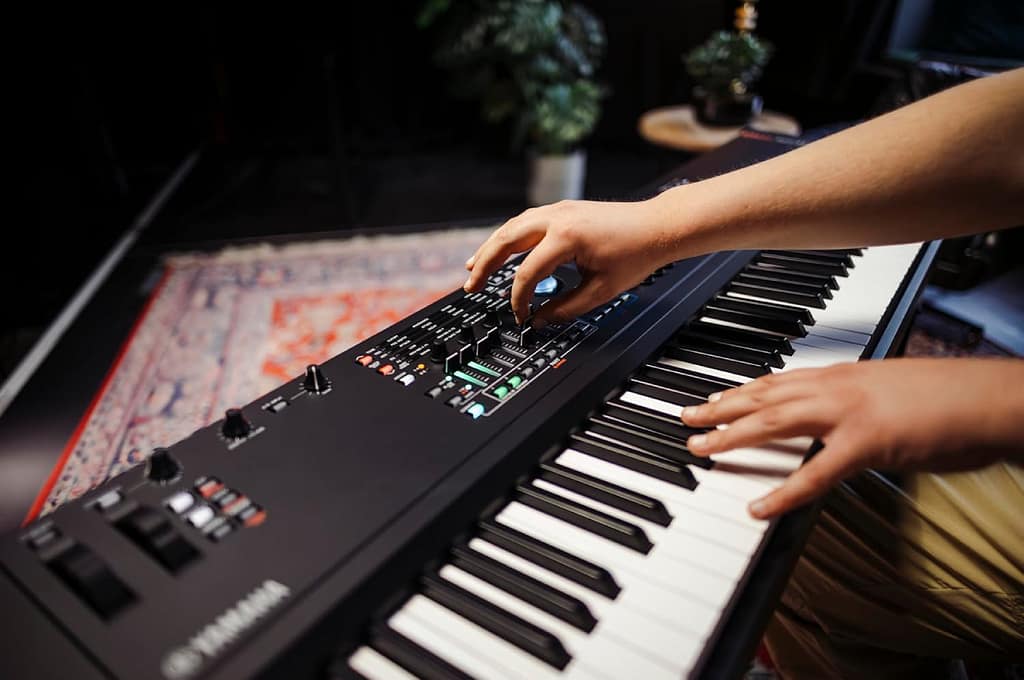
All major controls — including knobs, faders, pitch bend, mod wheel, and sound engines — now operate at high resolution, resulting in noticeably smoother transitions than previous MODX models. Dedicated Part and Scene selection buttons make it easy to manage up to eight Parts per Performance, an advantage for live musicians who need fast, reliable control.
Workflow, DAW Integration, and ESP Plugin
The MODX M8 is designed to bridge stage and studio seamlessly. It includes USB MIDI 2.0 and a multichannel 10-output / 4-input audio interface, enabling MIDI and audio recording through a single USB connection.
A major forward-looking feature is the Expanded Softsynth Plugin (ESP), provided free to registered MODX M owners. ESP replicates the MODX M engine inside a DAW, allowing users to create, edit, and mix performances without the hardware connected. This effectively extends polyphony and workflow flexibility and makes the MODX M8 a hybrid hardware-software system.

Sequencing and Effects
The onboard sequencer remains relatively basic compared to full workstation standards, focusing on performance capture rather than deep composition. While functional, some users may find it limited given the instrument’s otherwise advanced capabilities.
Effects quality is strong, with Yamaha’s established processing algorithms and features such as VCM Rotary Speaker adding realism and polish, particularly for organ and electric piano sounds.
Advantages
- Excellent 88-key GHS weighted action, ideal for pianists
- Three powerful engines (AWM2, FM-X, AN-X) covering a vast sonic range
- Very high polyphony (up to 268 notes)
- Expressive Motion Control system with Super Knob and Motion Sequences
- Improved workflow with touchscreen, display knobs, and doubled faders
- Strong USB MIDI 2.0 and multichannel audio interface
- Expanded Softsynth Plugin (ESP) for DAW integration
- Lightweight and portable for an 88-key instrument
- Strong value compared to flagship workstation pricing
Limitations
- Sequencer remains relatively basic
- Menu structure can feel complex or inconsistent to some users
- Occasional screen lag under heavy processing
- No built-in aftertouch on the GHS keybed
- Lacks a fully flexible per-part modulation matrix
Verdict
The Yamaha MODX M8 is a highly capable performance synthesizer that successfully balances realistic piano playability, deep synthesis, and modern workflow integration. Its combination of expressive controls, powerful sound engines, and DAW-ready design makes it especially appealing to pianists, gigging musicians, and producers who need versatility without excessive weight or cost.
While the sequencer and menu system may not satisfy users seeking a full workstation experience, the MODX M8 excels where it matters most: sound quality, expressiveness, and real-world usability.