
If you are shopping for the best synth workstation keyboard, you are probably past the point of wanting a keyboard that does just one thing well. You need a serious all-in-one instrument – something that can handle sound design, sequencing, layering, performance control, and often full-song production without forcing you into a laptop-first workflow.
That is exactly where workstation keyboards still earn their place. Despite the rise of software, grooveboxes, and dedicated stage boards, a strong workstation remains one of the fastest ways to go from an idea to a playable arrangement. The challenge is that not every workstation serves the same player. Some lean hard into sound libraries and polished presets. Others prioritize synthesis depth, sequencing, and hands-on control. If you are trying to choose the right one, the best option depends less on marketing claims and more on how you actually write, record, and perform.
What makes the best synth workstation keyboard?
A true workstation is more than a keyboard with a lot of sounds. It needs to combine a broad sound engine, multitimbral layering, onboard sequencing, effects, performance management, and enough control depth to support real musical work. The strongest models also balance these features without becoming slow or frustrating in daily use.
For most players, the core decision comes down to five factors: sound quality, workflow, keybed feel, sequencing power, and live usability. A workstation can have outstanding specs on paper and still fall short if the interface slows down writing sessions or menu navigation gets in the way onstage. That is why the best synth workstation keyboard for a studio composer may not be the best choice for a live keyboardist covering multiple bands.
Best synth workstation keyboard models worth considering
Yamaha Montage M
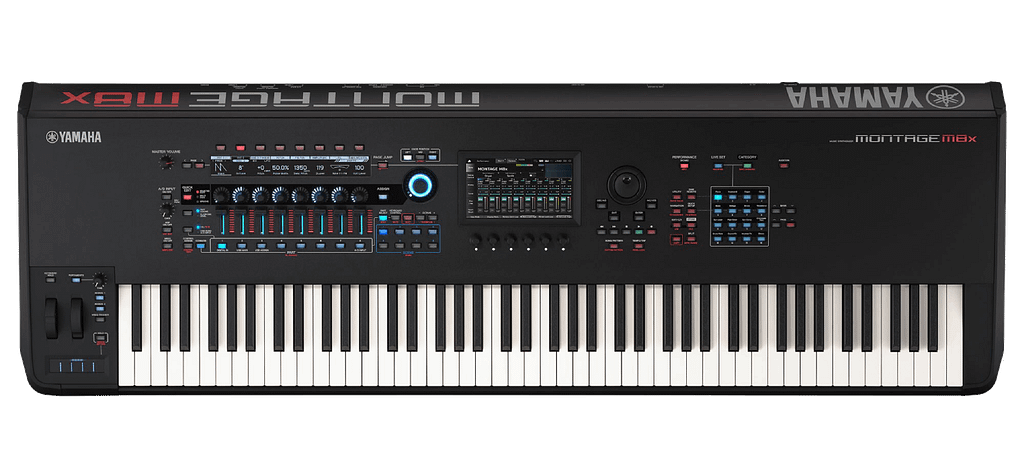
If your priority is sound quality, expressive control, and polished flagship performance, Yamaha’s Montage M deserves immediate attention. It builds on Yamaha’s workstation tradition while pushing harder into hybrid synthesis and modern control. The blend of advanced sample-based sound generation with FM capabilities gives it real range, from bread-and-butter pianos and pads to more aggressive electronic textures.
Where the Montage M stands out is in expressive playability. The Motion Control ecosystem, Super Knob integration, and strong effects architecture make it excellent for evolving layers and performance-oriented patch design. It feels like a premium instrument for players who want complexity under the hood without giving up high-end preset quality.
The trade-off is workflow preference. Some players love Yamaha’s performance-centered structure, while others still find Korg or Roland systems more immediate for linear song-building. If you do a lot of traditional onboard sequencing, that matters.
Korg Nautilus
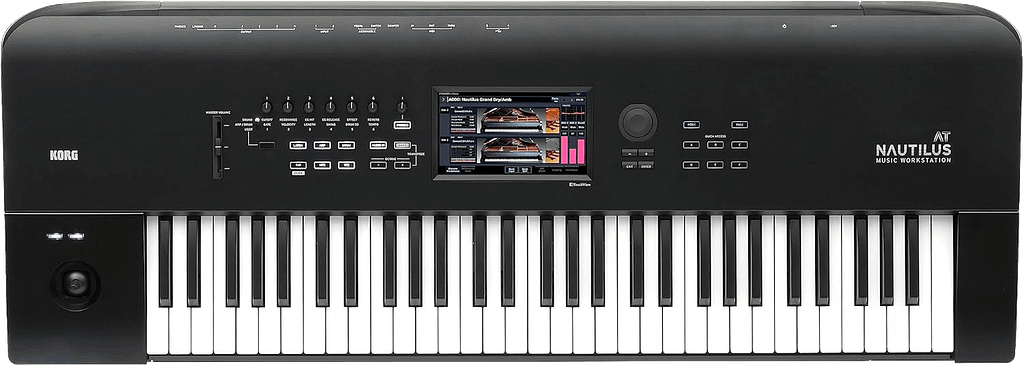
The Korg Nautilus is one of the clearest examples of a workstation aimed at musicians who want breadth. Its engine selection is deep, and Korg remains especially good at giving users a wide sonic palette that spans acoustic realism, digital synthesis, cinematic textures, and classic workstation layering.
Compared with older Korg flagships, the Nautilus trims some direct control, which helps price positioning but changes the hands-on experience. For studio users who are comfortable working through a touchscreen-driven interface, that may be a fair compromise. For live performers who want more immediate tactile access, it may feel less direct than expected.
Still, the sound set is broad and highly usable, especially for producers and keyboardists covering multiple genres. If you need one board to handle filmic pads, detailed pianos, punchy synth layers, and song production tools in a single package, the Nautilus remains very competitive.
Roland Fantom
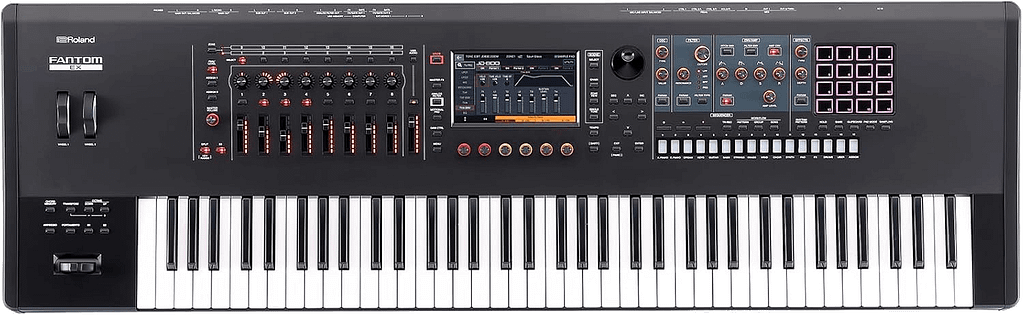
Roland’s Fantom sits near the top of this category because it is one of the best-balanced instruments for modern hybrid use. It works well as a standalone workstation, but it also integrates naturally into studio setups that include DAWs, external controllers, and outboard gear. That flexibility matters for players who do not want to be locked into a strictly self-contained workflow.
The Fantom’s strengths are speed, layering, and performance management. Roland did a strong job making scene-based organization practical, and the interface generally supports quick building of splits, zones, and layered textures. The synth side is also compelling, especially for electronic musicians who want more than preset playback and expect serious sound design potential.
Its weakness is not capability but cost. At flagship pricing, expectations rise quickly. If you mainly need preset coverage and occasional sequencing, a Fantom can be more machine than you need. But for players who want a workstation that feels current rather than legacy, it is one of the strongest options available.
Kurzweil K2700
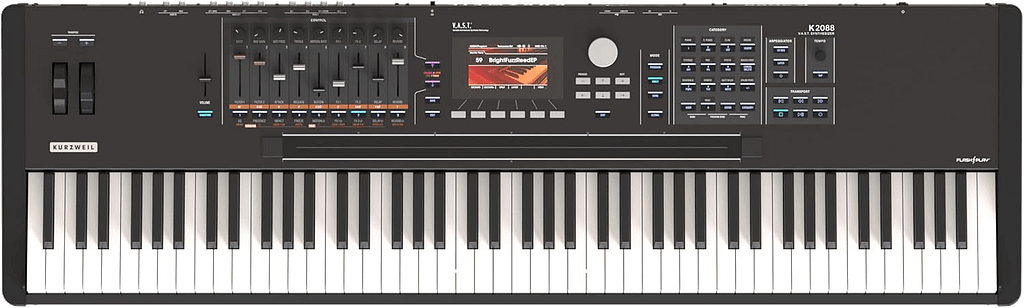
Kurzweil does not always dominate casual buying conversations, but serious keyboard players know the K2700 is not a lightweight contender. It offers deep synthesis, broad sound coverage, strong live-performance functionality, and a reputation for flexibility that appeals to power users.
The K2700 is especially attractive if you value detailed editing and layered performance setups. Kurzweil’s VAST architecture still offers significant programming depth, and that can make the instrument unusually rewarding for players who want to go beyond stock sounds. In practical terms, it can cover traditional workstation duties while also behaving like a serious synthesis tool.
The downside is that Kurzweil’s workflow can feel less immediately approachable than Yamaha or Roland for newer users. If you like digging into architecture, that is a strength. If you want instant familiarity, it may take more time.
Korg Kronos used market
Even though it has been replaced in the current lineup, the Kronos still matters in any honest conversation about the best synth workstation keyboard. On the used market, it remains one of the most feature-dense workstations ever made, with deep synthesis engines, extensive sequencing, and broad professional credibility.
For buyers willing to purchase used gear, the Kronos can still be a smart value. You get a mature platform with proven stage and studio utility, and many players still prefer its feature set to newer alternatives. The caution is obvious: age, support horizon, screen condition, and overall wear matter. Buying one requires more diligence than buying a current-generation model.
Which workstation is best for your kind of music?
If you are a live keyboardist covering pop, rock, worship, or corporate sets, Yamaha and Roland often make the most sense. Both offer strong preset quality, polished transitions, and performance structures that help when you need reliable set management under pressure.
If you are producing electronic music, cinematic material, or layered hybrid arrangements in the studio, Roland Fantom and Korg Nautilus usually feel more relevant. They offer strong synthesis depth and broader sonic experimentation, though they approach workflow differently. Roland tends to feel faster and more performance-modern. Korg tends to reward users who want a huge internal palette.
If your bias is toward programming depth and serious keyboard architecture, Kurzweil deserves more attention than it usually gets. It is not always the flashy pick, but it can be the right long-term instrument for players who care more about capability than trend momentum.
What to watch before you buy
The biggest mistake buyers make is assuming all workstation keyboards excel equally at sequencing, sound design, and live use. They do not. Some are better as performance hubs with deep layering. Others are closer to self-contained production environments. Some have excellent keybeds but less satisfying interfaces. Others offer huge feature counts but hide too much behind menus.
Key count matters more than many buyers admit. An 88-key weighted action can be ideal for piano-centered players, but it also adds bulk and changes how synth parts feel. A 61-key version may be better if your music leans toward leads, pads, and compact studio setups. Seventy-six keys often lands in the middle, especially for players who need range without the full size of an 88.
You should also think carefully about whether you want a workstation to replace other gear or complement it. If it needs to be your central songwriting instrument, sequencing and navigation become critical. If it is part of a larger rig, zoning, MIDI integration, and fast patch organization may matter more.
At SynthReview, the most consistent pattern we see is that the right workstation is usually the one that matches your workflow speed, not just your wish list. A keyboard that invites you to write will outperform one that looks better on a spec sheet but slows you down every time you start a track.
The best synth workstation keyboard is the one you will actually finish songs on
That may sound obvious, but it is the most useful filter in this category. Yamaha Montage M is a premium choice for expressive performers who want refined sound and modern control. Roland Fantom is one of the best all-around options for players balancing stage work, production, and synthesis depth. Korg Nautilus offers a huge sonic range and serious workstation value, especially for studio users. Kurzweil K2700 rewards advanced users who want flexibility and deeper programming. A used Kronos still makes sense if you want maximum feature density and are comfortable buying older flagship gear.
If possible, judge these instruments less by isolated demos and more by the kind of session you actually run. Think about how quickly you build splits, save songs, shape sounds, and move from sketch to arrangement. The best workstation is not just the one with the biggest engine. It is the one that keeps your hands on the keys and your ideas moving.